

Our Products Make Your Product Better®

Related Products
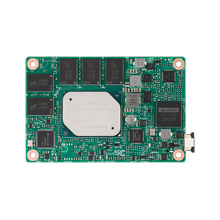
SOM-7569 is a COM Express Mini module with type 10 pin-out that fully complies with the PICMG (PCI Industrial Computer Manufactures Group) COM.0 R2.1 specification.
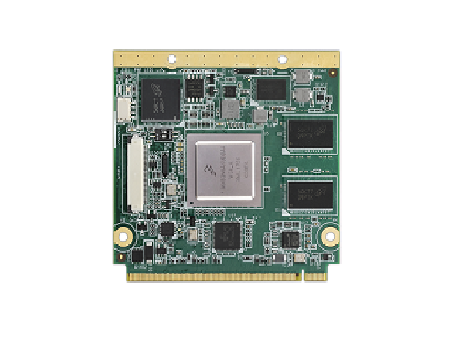
ROM-7720 Qseven 2.1 Module powered by the NXP i.MX8 QuadMax Processor, which composed of eight cores, including 2 ARM Cortex-A72 cores, 4 Cortex-A53 cores and 2 Cortex-M4F cores into one single IMX
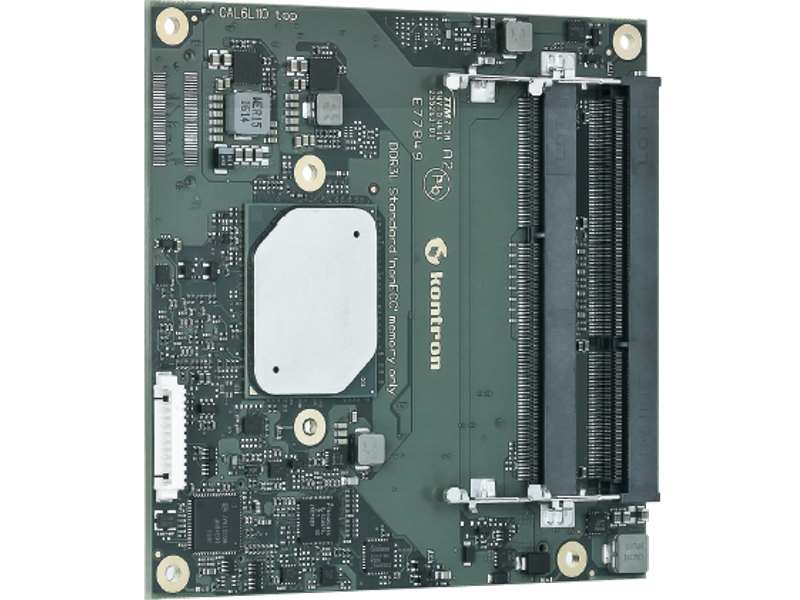
The COMe-cAL6 COM Express compact Type 6 module is highly scalable and covers the entire range of Intel's latest IoT-ready embedded processors.
SoM-400EM


 15spi111SS21
  15spi111SS21
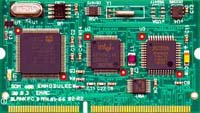
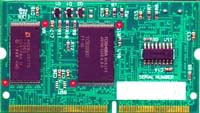
 The SoM-400EM is based on the 8051 code compatible Maxim/Dallas™ DS80C400 TINI® processor. The Tiny InterNet Interface (TINI®) processor is a Java programmable processor that is ideal for use in Internet appliances and Web based applications.
This 8-bit 8051 code compatible processor has an Ethernet MAC built-in along with 3 serial ports. It can directly access 16 MB of memory and has a UNIX type OS that features a complete file system.
Features
- Small, 144 pin SODIMM form factor (2.66" x 1.5")
- 10/100BaseT Ethernet with on-board PHY
- 3 serial port with handshake
- 1 non-isolated CAN port
- Up to 2 MB of low power battery backed RAM
- 2 MB of Flash
- Nonvolatile RAM/File System
- Battery backed Real Time Clock
- 1-Wire® Network provision
- High-speed math accelerator for 16/32-bit multiply and divide
- Typical power requirement of about 1.5 Watts
- TINI SDK 1.12 and Java 1.4x
- Robust FREE Java development tools
Overview
The SoM-400EM is based on the 8051 code compatible Maxim/Dallas™ DS80C400 TINI® processor. The Tiny InterNet Interface (TINI®) processor is a Java programmable processor that is ideal for use in Internet appliances and Web based applications.
This 8-bit 8051 code compatible processor has an Ethernet MAC built-in along with 3 serial ports. It can directly access 16 MB of memory and has a UNIX type OS that features a complete file system.
The only drawback to this processor was that it does not have a hardware SPI port. To overcome this drawback, EMAC designed a PLD SPI engine that connects directly to the processor's data bus. This allows the EMAC SoM-400EM to meet customer SPI speed requirements, that a bit-banged SPI could not. EMAC also added a programmable oscillator and 10 general-purpose digital I/O lines to this SoM.
Using the same SODIMM form-factor that Maxim/Dallas™ used on their reference board, EMAC then added additional higher speed memory, an Ethernet PHY, a hardware SPI port, and digital I/O lines. EMAC also wrote a custom native SPI driver to support the hardware SPI port. A special version of the board can be purchased that is backwards compatible with the Maxim/Dallas™ reference board.
Since the SoM-400EM normally runs a Java Interpreter, it can tend to be slow executing certain tasks. In order to provide more throughput for the customers that need it, EMAC has designed a hardware compatible 32-bit SoM which can offer the user a higher speed alternative. For more info on this SoM click here.
The SoM-400EM is designed to plug into a carrier board that contains all the connectors and any custom I/O required for the application. This approach allows the customer or EMAC to design a Custom Carrier Board, that meets the customer's I/O, dimensional, and connector requirements without having to worry about the processor, memory, and standard I/O functionality. With this System on Module approach, a semi-custom hardware platform can be developed in as little as a month.
In addition to the option of the developing a Carrier Board, one can be purchased off-the-shelf from EMAC. EMAC provides off-the-shelf Carrier Boards that feature A/D, D/A, MMC/SD card, keypad, LCD, and Modem interfaces. The off-the-shelf Carrier Board (SoM-100ES) allows the user to immediately start coding their application using a powerful Embedded Java Compiler and Tools.
The System on Module approach provides the flexibility of a fully customized product at a greatly reduced cost.
| Manuals | |
|---|---|
| som-400em_manual_v1.1.pdf | Download (PDF) |
| FAQ.txt | Download (TXT) |
| Data Sheets |
|---|
Specifications
| Processor | |
|---|---|
| CPU | Dallas™ TINI® DS80C400 8-bit |
| Clock Speed | 30 MHz |
| Memory | |
|---|---|
| Primary Flash | 2 MB Flash |
| BIOS/ Bootloader | Resident Flash Bootloader |
| Memory Misc. |
|
| Primary IO | |
|---|---|
| GPIO | 5 dedicated Digital Inputs and 5 dedicated Digital Outputs with 25 ma. drive |
| Ethernet | 10/100BaseT with on-board PHY |
| Serial Ports | 3 Serial Ports, 1 SPI |
| Secondary IO | |
|---|---|
| CAN | CAN 2.0B |
| SPI | PLD based SPI engine with two chip selects externally decodable to four |
| Timers/ Counters/ PWM | 4x 16-bit timers/counters with 1x up/down timer/ capture and baud-rate generation features |
| Expansion | |
|---|---|
| Bus Expansion | 144-pin SODIMM |
| Misc | |
|---|---|
| Operating Systems Compatibility |
|
| SOM Type | Microcontroller SODIMM Modules |
Mechanical and Environmental
| Dimensions | |
|---|---|
| Size | 2.66" ×1.5" (67mm × 38mm) |
| Weight | 0 g (0 lbs) |
| Power Requirements | |
|---|---|
| Voltage | 3.3 V |
| Typical Voltage | 3.3 V |
| Typical Current | 200 mA |
| Environmental | |
|---|---|
| Low Operating Temperature | 0 C (32 F) |
| High Operating Temperature | 70 C (158 F) |
| Upper Operating Humidity | 90% |
Pricing
Pricing correct as of January 2021. Please contact EMAC for Current Pricing and Lead Time. Due to volatility in the electronics industry pricing is subject to change.
OEM / Quantity Pricing Available on Request - Less Services
(Single Unit Pricing. Includes: Integration, Setup,Testing, & Enhanced Support)
| Product # | Description | Price |
|---|---|---|
| Stock | ||
| SoM-400EM-100 | w/ CPU, 1 MB, SPI, LAN | Call |
| SoM-400EM-110 | w/ CPU, 2 MB, SPI, LAN | Call |
| Dallas Compatible Stock | ||
| SoM-400EM-400 | TINI 1 MB Dallas Compatible Module | Call |
| Dallas Compatible Non-Stock | ||
| SoM-400EM-410 | TINI 2 MB Dallas Compatible Module | Call |
Non-stock Minimum Order: 50, NCNR