
Our Products Make Your Product Better®

Related Products
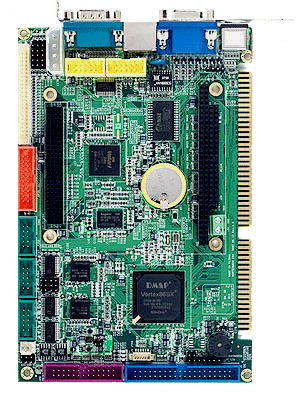
The VSX-6124 utilizes an onboard Vortex86SX Fanless 300MHz processor built for Ultra Low Power Consumption. The processor is highly integrated so that it reduces the price of any board utilizing this processor. The VSX-6124 is comes with a PC/104 bus connector and an optional PCI-104 / PC/104+ bus connector which allows it to utilize higher end PCI bus based modules. **Flash Disk not included.**
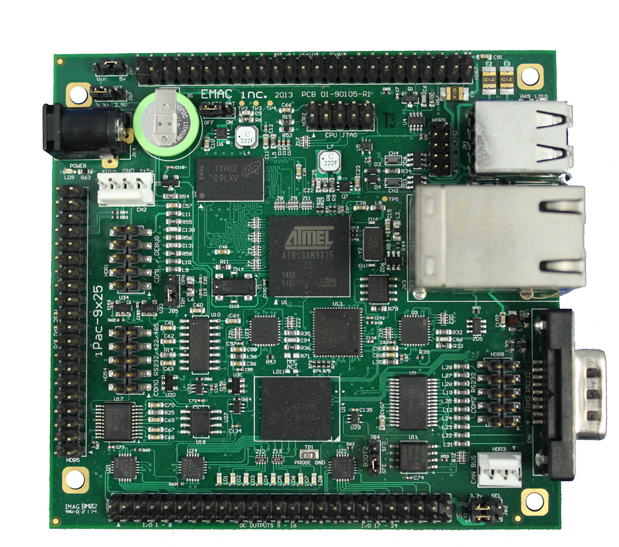
EMAC, Inc.; a leader in compact low power single board computer design and manufacturing has created the iPAC-9X25. Made in the USA this industrial strength embedded single board computer is base
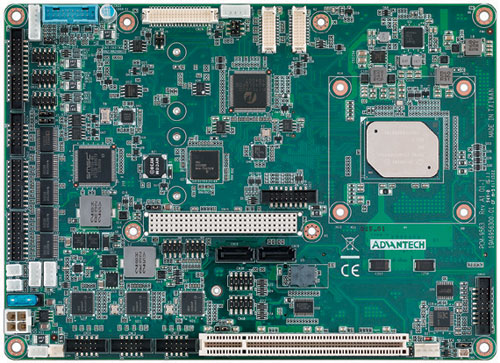
The PCM-9563's design is based on the EBX form factor and provides expansion support via PCI-104, a PCI slot, M.2, mSATA and a Mini PCI Express slot.
Android
Android is a Linux-based operating system for mobile devices such as smartphones and tablet computers. It is developed by the Open Handset Alliance led by Google. Google purchased the initial developer of the software, Android Inc., in 2005. According to the Android project "The goal of the Android Open Source Project is to create a successful real-world product that improves the mobile experience for end users".
Android consists of a kernel based on the Linux kernel, with middleware, libraries and APIs written in C and application software running on an application framework which includes Java-compatible libraries based on Apache Harmony. Android uses a virtual machine with just-in-time compilation to run dex-code (Dalvik Executable), which is usually translated from Java bytecode. The main hardware platform for Android is the ARM architecture, however recently there has been support added for x86 from the Android x86project.
Anyone considering using Android should realize that using Android in Embedded Applications adds a layer of complexity and inefficiency that may not make sense for many User Interfaces in the Embedded arena. However, if the unit is an battery backed Industrial Tablet or similar mobile device Android may be a good fit. Application programming is typically done in Java although C can be used with some difficulty.
EMAC can provide Android (Gingerbread, Ice Cream Sandwich or Jellybean) for several of our products. Call for further details.

